第3章 流程控制语句
发表时间:2022-03-24来源:网络
实验内容:

1.判断整数的奇偶性。
2.输出所有的水仙花数。
3.猜数字游戏。
4.输入并统计学生成绩
实验步骤:
1. 从键盘上输入一个整数,判断其奇偶性并输出。
提示:从控制台输入数据的方法示例:
System.out.println("请输入一个整数:"); Scanner scan=new Scanner(System.in); int num=scan.nextInt();
源代码:
package sy3; import java.util.Scanner; public class Sy_1 { public static void main(String[] args){ System.out.println("请输入一个整数:"); Scanner sc = new Scanner(System.in); int num = sc.nextInt(); if(num%2 == 0) System.out.printf(num+"是偶数"); else{ System.out.printf(num+"是奇数"); } } }运行结果截图:
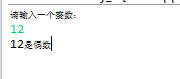
2. 输出所有的水仙花数。所谓水仙花数是指一个三位整数,其各位数字的立方和等于其自身,例如:153=13+53+33。要求在一行输出结果。
源代码:
package sy3; public class Sy3_2 { public static void main(String[] args){ int x=0,y=0,z=0; for(int i=100;i num){ System.out.println("猜大了"); guess = sc.nextInt(); } else if(guess < num){ System.out.println("猜小了"); guess = sc.nextInt(); } } System.out.println("恭喜你,猜对了"); } }
运行结果截图:

4.输入一批学生成绩,以-1作为结束标记。
(1)统计这批学生中不及格、及格、中等、良好、优秀的人数。
(2)求这批学生的平均分。
提示:从控制台输入成绩的方法示例:
Scanner scan=new Scanner(System.in);
System.out.println("请输入一批学生成绩,以-1作为结束标记:");
源代码:
package sy3; import java.util.Scanner; public class Sy3_4 { public static void main(String[] args){ int score=0,a=0,b=0,c=0,d=0,e=0,sum=0; Scanner sc = new Scanner(System.in); System.out.println("请输入成绩,输入-1查看结果:"); score = sc.nextInt(); while(score != -1){ if(score>=90){ System.out.println("优秀"); a++; } else if(score>=80){ System.out.println("良好"); b++; } else if(score >= 70){ System.out.println("中等"); c++; } else if(score >= 60){ System.out.println("及格"); d++; } else{ System.out.println("不及格"); e++; } sum += score; score = sc.nextInt(); } System.out.println("成绩优秀的人有:"+a); System.out.println("成绩良好的人有:"+b); System.out.println("成绩中等的人有:"+c); System.out.println("成绩及格的人有:"+d); System.out.println("成绩不及格的人有:"+e); double average = sum*1.0/(a+b+c+d+e); System.out.printf("平均分:" + average); } }运行结果截图:

实验小结
通过本章的学习,了解了几种常用的循环语句,条件语句。
条件语句:if条件句有三种形式
1:if(表达式){方法体}
2:if(表达式){方法体} else {方法体}
3:if(表达式){方法体} else if(表达式){方法体} else{方法体}
了解了循环语句:
包括while循环语句,do…while循环语句和for循环其中while(布尔表达式)和 do…while(布尔表达式)类似,while是先判断后执行,do…while是先执行一次然后再判断条件。如果布尔表达式结果为真,那么两个循环语句结果相同,若布尔表达式的第一次结果为假,do…while会先执行一次,而while则不会继续执行。
for循环格式:for(变量初始化;条件判断;步进){循环语句},只进行一步初始化,然后进行条件判断,为真后执行for中的循环语句,执行后进行步进,然后继续进行条件判断,直到结果为假,跳出循环
知识阅读




软件推荐
更多 >-
 查看
查看计支宝app下载v3.1.29 安卓版
142.27MB |商务办公
-
 查看
查看小小优酷最新版下载v5.4.6 安卓官方版
68.11MB |影音播放
-
 查看
查看艺图语app下载v3.3.4 安卓免费版
34.33MB |系统工具
-
查看
爱鸽者手机版下载v3.2.9 安卓版
243.57MB |商务办公
-
 查看
查看一品威客网接单app(一品众包)下载v2.7.1 安卓最新版
55.01MB |商务办公
-
 查看
查看诸葛找房网官方版下载v4.8.1.1 安卓最新版
66.6MB |生活服务
-
 查看
查看皓盘云建最新版下载v9.0 安卓版
53.38MB |商务办公
-
 查看
查看ris云客移动销售系统最新版下载v1.1.25 安卓手机版
42.71M |商务办公


-
1

-
2
葫芦侠三楼最新破解版下载v4.4.0.6 安卓版
其它手游 -
3
葫芦侠7楼破解版免费下载v4.4.0.6安卓最新版
其它手游 -
4
葫芦侠八楼免费版下载v4.4.0.6安卓版
其它手游 -
5
葫芦侠3楼破解版免费下载v4.4.0.6安卓手机版
其它手游 -
6
像素漫斗抱歉,“八神庵”是特指游戏角色的专有名词,不存在符合要求的常用同义词近义词。下载v1.00安卓版
其它手游 -
7
葫芦侠4楼破解版游戏修改器下载v4.4.0.6安卓免费版
其它手游 -
8
末日餐厅安卓版下载v1.35安卓版
其它手游 -
9
葫芦侠十楼免费破解版下载v4.4.0.6安卓版
其它手游 -
10
葫芦侠8楼最新破解版下载v4.4.0.6安卓版
其它手游